
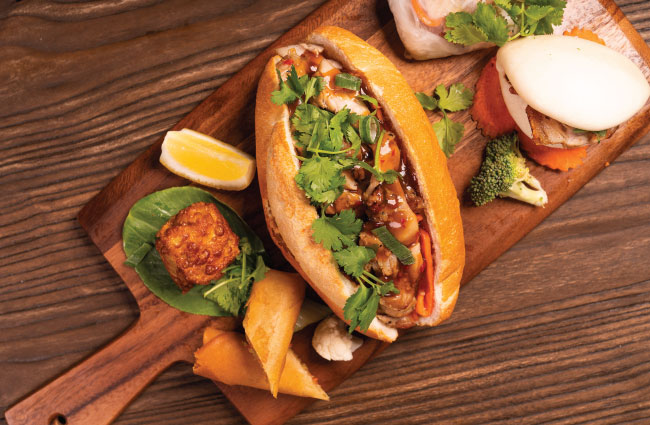
Explore the vibrant history, complex flavours and cultural
heart of Vietnam’s iconic sandwich.
The Story of Banh Mi
The Banh Mi is more than a sandwich, it’s a living piece of history. This section explores its origins, tracing its path from a French colonial import to a symbol of Vietnamese ingenuity and culinary identity. Learn how the humble baguette was transformed into the flavour-packed icon beloved worldwide.
Mid-19th CenturyThe Arrival Mid-19th Century: The Arrival
The French arrive in Vietnam, introducing their cuisine, including the
baguette. Initially, it’s a luxury item, expensive and enjoyed primarily
by French colonists and the local elite with simple pairings like butter
and pâté.
Early-Mid 20th CenturyAdaptation Early-Mid 20th Century: Adaptation
As French influence wanes and Vietnam moves towards independence, the baguette becomes more accessible. Vietnamese cooks begin to adapt, filling it with affordable local ingredients, marking the first steps towards a distinctly Vietnamese sandwich.
1950sSaigon: The Birth of an Icon 1950s Saigon: The Birth of an Icon
The modern Banh Mi as we know it is born in Saigon. Following the 1954 partition of Vietnam, an influx of northern migrants brings new culinary traditions, diversifying the fillings. The name “bánh mì”, literally meaning “wheat bread,” becomes synonymous with the sandwich itself, cementing its status as a cultural staple.
Ingredients of a Banh Mi
What makes a Banh Mi so unforgettable? It’s a symphony of textures and flavours.
In this section, you can deconstruct the sandwich to explore its core components. Click on each element to learn about its role in creating the perfect bite, from the crispy baguette to the zesty pickles and savoury meats.
Base Ingredients
Bánh Mì
The foundation of the sandwich. A proper Banh Mi is made with a mix of wheat and rice flour, resulting in a shatteringly thin, crispy crust and an incredibly soft, light and airy interior. It’s the perfect vessel for holding the diverse fillings without being too heavy or dense.
Mayonnaise
A creamy spread that adds richness and moisture, balancing the savoury and tangy elements of the Banh Mi.
Pickled vegetables
Essential for their tangy, sweet and crunchy contrast. These pickled vegetables cut through the richness of the meats and add a refreshing zest.
Herbs & veggies
Fresh herbs like coriander provide an aromatic lift, while crisp cucumber and pungent spring onion add refreshing crunch and a subtle bite, enhancing the overall freshness.
Soy Sauce
A dash of savoury soy sauce (or Maggi Seasoning Sauce) is often drizzled over the ingredients, adding an extra layer of umami flavour that ties everything together.
The foundation of the sandwich. A proper Banh Mi is made with a mix of wheat and rice flour, resulting in a shatteringly thin, crispy crust and an incredibly soft, light and airy interior. It’s the perfect vessel for holding the diverse fillings without being too heavy or dense.
A creamy spread that adds richness and moisture, balancing the savoury and tangy elements of the Banh Mi.
Essential for their tangy, sweet and crunchy contrast. These pickled vegetables cut through the richness of the meats and add a refreshing zest.
Fresh herbs like coriander provide an aromatic lift, while crisp cucumber and pungent spring onion add refreshing crunch and a subtle bite, enhancing the overall freshness.
A dash of savoury soy sauce (or Maggi Seasoning Sauce) is often drizzled over the ingredients, adding an extra layer of umami flavour that ties everything together.
Protein Options
Crackling Roast Pork
Succulent roasted pork with crispy, crackling skin, offering a rich, savoury and satisfying crunch.
Energy: 733 – 1660 kJ
Grilled Chicken
Tender, marinated grilled chicken, often with a smoky flavour, providing a lean and flavourful protein option.
Energy: 733 – 1660 kJ
Lemongrass Tofu (VG)
Flavourful tofu marinated in aromatic lemongrass, offering a delicious vegetarian option.
Energy: 733 – 1660 kJ
Satay Chicken
Chicken pieces coated in a rich, nutty satay sauce, adding a unique sweet and savoury profile.
Energy: 733 – 1660 kJ
Combination (2 choices)
A classic choice allowing you to combine two of your favourite protein options for a diverse flavour experience.
Energy: 733 – 1660 kJ
Succulent roasted pork with crispy, crackling skin, offering a rich, savoury and satisfying crunch.
Energy: 733 – 1660 kJ
Tender, marinated grilled chicken, often with a smoky flavour, providing a lean and flavourful protein option.
Energy: 733 – 1660 kJ
Flavourful tofu marinated in aromatic lemongrass, offering a delicious vegetarian option.
Energy: 733 – 1660 kJ
Chicken pieces coated in a rich, nutty satay sauce, adding a unique sweet and savoury profile.
Energy: 733 – 1660 kJ
A classic choice allowing you to combine two of your favourite protein options for a diverse flavour experience.
Energy: 733 – 1660 kJ
Meal Deals
Discover our value-packed meal deals, perfect for any appetite. Combine your favourite Banh Mi with delicious snacks and refreshing drinks.
Bami Roll Deals
○ 1 Bami Roll + 3 Snacks + 1 Can
○ 1 Bami Roll + 1 Snack + 1 Can
Pocket Roll Deals
○ 1 Pocket Roll + 3 Snacks + 1 Can
○ 1 Pocket Roll + 1 Snack + 1 Can
○ 1 Pocket Roll + 1 Sugarcane Frost
Chef’s Tip
○ Bami Roll + Crackling Roast Pork = Heaven!
○ Text below tip: Energy values for proteins: 733 – 1660 kJ
Bami Meal Deals
Fun Facts About Banh Mi
Did you know? Here are some interesting tidbits about Vietnam’s beloved sandwich.
Global Recognition
Banh Mi was listed among the world’s top street foods by The Guardian newspaper and has gained immense popularity in cities like Melbourne, Sydney and across the globe.
The Perfect Crunch
The unique texture of Banh Mi bread, with its thin, crispy crust and airy interior, is often attributed to the use of a combination of wheat and rice flour, a Vietnamese adaptation of the French baguette.
A Culinary Fusion
Banh Mi perfectly embodies culinary fusion, blending French culinary techniques (the baguette) with distinctly Vietnamese ingredients and flavours, creating a truly unique and delicious experience.
Breakfast Favourite
In Vietnam, Banh Mi is a common breakfast choice, often enjoyed with a cup of strong Vietnamese coffee. Its convenience and satisfying nature make it a perfect start to the day for many locals.
Endless Variations
While classic fillings exist, Banh Mi is incredibly versatile. Vendors and home cooks constantly experiment with new combinations, reflecting regional tastes and personal preferences, making every Banh Mi experience potentially unique.
Fun Facts Banh Mi Section
The Heart of Vietnamese Culture
Banh Mi is woven into the fabric of daily life in Vietnam. It’s a symbol of affordability, adaptability and national pride. This section highlights its cultural significance, from its role as the ultimate street food to its variations across the country. Discover why this sandwich is so much more than just a meal.
Street Food Staple
Banh mi is quintessentially street food. Vendors with small carts and portable ovens are a common sight on every corner, serving up fresh, warm sandwiches from morning till night. It’s the ultimate convenient, affordable and delicious meal on the go.
A Meal for Any Time
Versatile and satisfying, Banh Mi is enjoyed at any time of day. It can be a hearty breakfast to start the day, a quick and fulfilling lunch, or a savoury afternoon snack. Its role adapts to the rhythm of daily life.
The Art of Assembly
A great Banh Mi is a masterpiece of balance. Each ingredient is carefully layered to ensure a perfect harmony of flavours and textures in every single bite. The bread is often toasted to order, enhancing its signature crispy crust.
Banh Mi Street Food
Regional Variations: A Tale of Two Tastes
In places like Hanoi, the Banh Mi tends to be simpler and more focused on the basics. It often features fewer ingredients, perhaps just pâté, a type of meat, and pork floss, emphasising the quality of the bread and the primary fillings without a lot of herbs or vegetables.
The Saigon-style Banh Mi is what most of the world is familiar with. It’s known for being loaded with an eclectic mix of fillings: multiple types of meat, generous amounts of pickled vegetables, fresh herbs, cucumber, chili and various sauces. It’s a true explosion of flavour and
texture.
In places like Hanoi, the Banh Mi tends to be simpler and more focused on the basics. It often features fewer ingredients, perhaps just pâté, a type of meat, and pork floss, emphasising the quality of the bread and the primary fillings without a lot of herbs or vegetables.
The Saigon-style Banh Mi is what most of the world is familiar with. It’s known for being loaded with an eclectic mix of fillings: multiple types of meat, generous amounts of pickled vegetables, fresh herbs, cucumber, chili and various sauces. It’s a true explosion of flavour and
texture.
Share this recipe